
Henna Artistry for Meaningful, Lasting Beauty
A fresh henna design asks you to slow down. There is the gentle rhythm of the artist’s hand, the earthy scent of the paste, and the small pleasure of watching an intricate pattern take shape on your skin. Henna artistry is more than temporary body art. Rooted in South Asian traditions and cherished across many cultures, it brings beauty, personal expression, and a sense of occasion to the everyday.
Whether you are preparing for a wedding, a festive gathering, a milestone, or simply want a beautiful pause in a busy week, a well-applied henna design can feel deeply personal. The best experience pairs skilled detail work with pure ingredients, thoughtful design, and unhurried care.
What Makes Henna Artistry So Special?
Henna is made from the leaves of the Lawsonia inermis plant. When the leaves are dried and finely ground, they create a natural paste that leaves a warm stain on the outermost layer of the skin. Depending on skin chemistry, placement, care, and the quality of the paste, the stain may range from soft orange to rich reddish brown.
The appeal of henna lies in its temporary nature. A design can be elaborate and meaningful without asking for a permanent commitment. It gives you room to choose a pattern that suits a particular celebration, outfit, mood, or season of life.
For many women, the ritual is just as rewarding as the final design. Sitting for henna creates a quiet pocket of time in a schedule often filled with work, family, and obligations. It is beauty care with a more reflective pace - expressive, calming, and designed around you.
Tradition, Celebration, and Personal Style
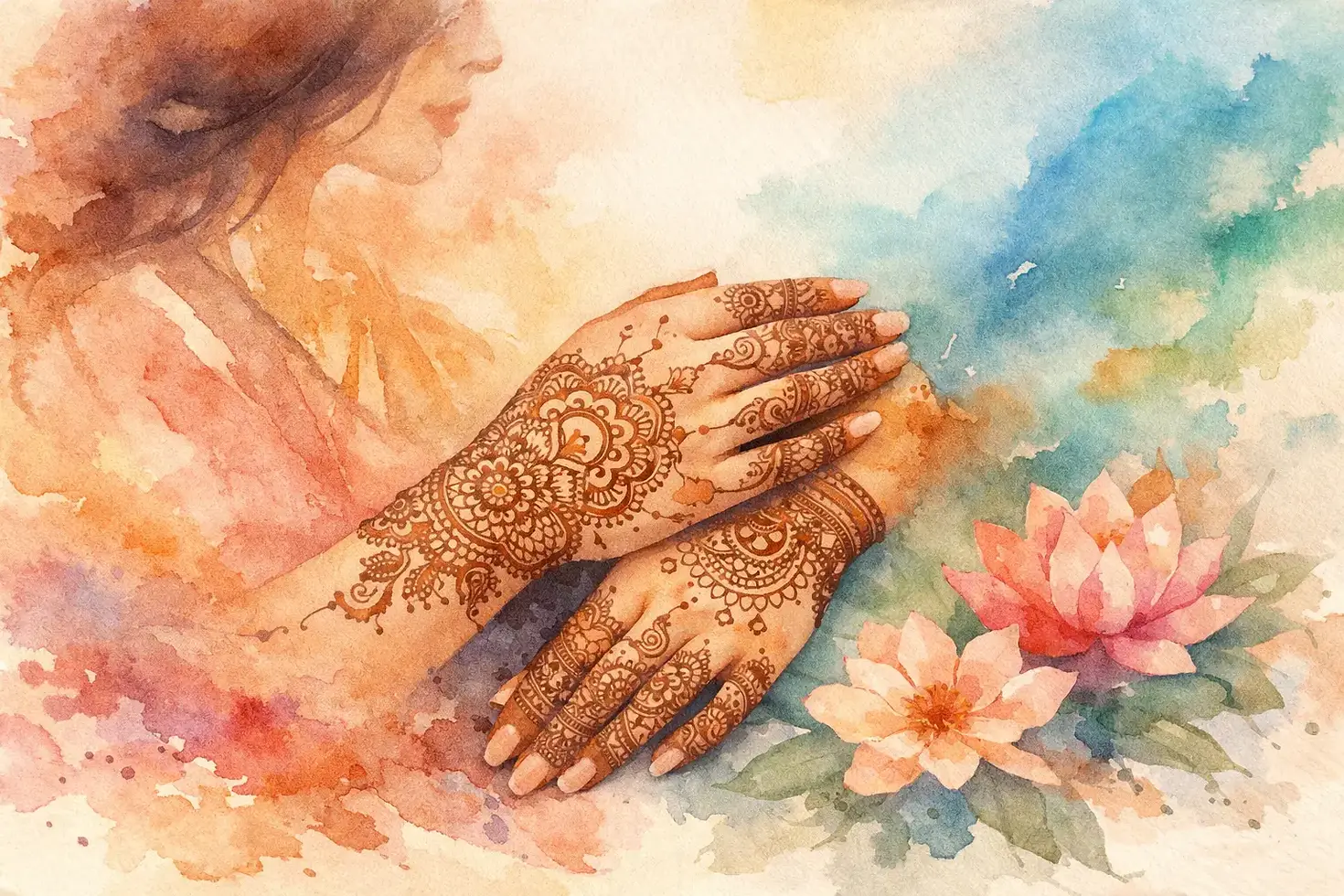
Henna has a longstanding place in Indian celebrations, especially bridal traditions and festive occasions such as Diwali, Eid, and Karva Chauth. Bridal mehndi can include detailed florals, paisleys, mandalas, and delicate storytelling elements that honor a couple, family, or shared memory.
Yet henna does not need to be reserved for a major event. A small mandala on the palm, floral vines along the wrist, or an elegant pattern on the back of the hand can complement a dinner, vacation, birthday, or a well-deserved self-care day. Traditional motifs and modern minimalism both have a place. The right choice depends on how visible you want the design to be, how much time you have, and what feels authentic to your style.
Choosing a Henna Design That Feels Like You
A beautiful design is not always the most densely detailed one. Placement, scale, and balance matter just as much as pattern complexity. Before your appointment, consider the occasion and how you use your hands day to day.
Palm designs often develop the deepest color because the skin is thicker and warmer, but they can fade sooner with frequent handwashing. Designs on the back of the hand are highly visible and photograph beautifully. Wrist and forearm patterns offer a graceful, jewelry-like effect, while feet and ankles can feel especially elegant for celebrations. If you work at a keyboard, cook frequently, or have an event several days away, let your artist know. A thoughtful placement can help the design look its best when it matters most.
Popular Design Directions
Floral henna remains a favorite because it is soft, versatile, and flattering across different hand shapes. Fine leaves and trailing vines can create an airy finish, while fuller blooms offer more visual presence.
Mandalas bring symmetry and calm. Centered on the palm or back of the hand, they create a polished focal point without covering the entire hand. Paisleys and traditional Indian motifs feel timeless and can be layered into more elaborate designs for festivals and weddings.
For a contemporary look, many clients choose negative space, fine-line accents, or a pattern that resembles delicate hand jewelry. These designs are often quicker to apply, but they still require precision. Fine lines can look striking, although they may soften more quickly than bolder shapes as the stain fades.
Why Natural Henna Matters for Your Skin
Not all products sold as henna are the same. Pure, natural henna paste is typically greenish brown before application and develops into orange, red, or brown tones as it stains. It should never create a true black stain immediately.
Products marketed as "black henna" may contain added dyes, including para-phenylenediamine, commonly known as PPD. These additives can cause serious skin reactions, blistering, and long-term sensitivity. A very dark, instant result may sound appealing, but it is not worth compromising your skin’s comfort and health.
A professional henna service should prioritize quality paste, hygienic application, and clear guidance. If you have sensitive skin, allergies, eczema, or a history of reactions to hair dye or cosmetic colorants, share that before your service. A patch test may be appropriate, especially when you are trying henna for the first time. Natural care is not about making broad promises - it is about choosing ingredients and practices with care, then responding to your individual skin needs.
How to Prepare for a Beautiful, Deep Stain
A little preparation can make a noticeable difference. Arrive with clean, dry skin free from lotion, body oil, sunscreen, or fragrance on the area being decorated. These products can create a barrier and reduce how evenly the henna takes to the skin.
Try to schedule your henna appointment one or two days before an important event when possible. The paste is removed after it has had time to rest on the skin, but the color continues to deepen over the next 24 to 48 hours. A design that begins as a bright orange stain can mature into a richer, warmer brown.
Avoid booking waxing, exfoliation, or a body scrub on the same area after your henna application. If you want both grooming and body art, complete exfoliating treatments first, then enjoy your henna as the finishing touch. This is particularly useful before weddings and festive events, when smooth skin and lasting detail both matter.
Simple Aftercare That Protects Your Design
Once the paste has been applied, patience is your best aftercare tool. Keep the area still and dry while the paste sets. Your artist will advise how long to leave it on based on the paste and design placement. Rather than washing it away, gently scrape the dried paste off when instructed.
For the first several hours, limit contact with water. Heat can help the color develop, while long exposure to water, chlorine, frequent soap use, and exfoliation can make the stain fade faster. A little natural oil or balm may help protect the design before washing, though your artist can recommend what is suitable for your application.
Henna fades gradually as the outer layer of skin naturally sheds. Hands and feet often experience more friction and washing, so their designs may change sooner than a pattern on the forearm. This is normal, and it is part of the living, temporary quality that makes henna so special.
Henna as Part of a Restorative Beauty Ritual
Henna pairs beautifully with other moments of intentional care. Before a celebration, you might begin with a calming head oil massage, freshen your brows with precise threading, or choose a facial suited to your skin’s needs. The result is not simply being ready for photographs. It is arriving at an occasion feeling cared for, composed, and comfortable in your own skin.
At Ohm Secrets in Little India, Singapore, henna artistry can be approached as part of this wider ritual of traditional beauty and modern salon comfort. The focus should always remain on professional precision, a calm setting, and designs that make you feel like yourself - only a little more adorned.
When to Keep It Simple
Elaborate bridal henna deserves time, planning, and an experienced artist. But a smaller design can be just as meaningful. If you are new to henna, have a short window before an event, or prefer a subtle finish for work, choose a focused motif rather than a full-hand pattern.
There is also a practical trade-off between detail and longevity. Tiny lines and intricate lacework are beautiful, but they may appear lighter as the stain ages. Bolder leaves, petals, and geometric shapes tend to remain visually clear for longer. An experienced artist can guide you toward a design that matches both your aesthetic and your calendar.
The most memorable henna is not necessarily the largest or darkest. It is the design that suits the moment, respects your skin, and lets you carry a little beauty with you as your week unfolds.


Comments