

Does Threading Damage Skin? What Your Face Needs
A freshly threaded brow can make the whole face look more polished, but the redness that sometimes follows can raise a fair question: does threading damage skin? For most people, professional threading does not damage healthy skin. It is a precise, chemical-free method of hair removal that lifts unwanted hair from the root. Still, the condition of your skin, the technician's technique, and your aftercare all shape how calm and comfortable your complexion feels afterward.
At Ohm Secrets, threading is treated as more than a quick grooming step. It is a traditional Indian beauty practice that calls for a steady hand, close attention to the skin, and a gentle approach that respects your natural features.
Does Threading Damage Skin When It Is Done Properly?
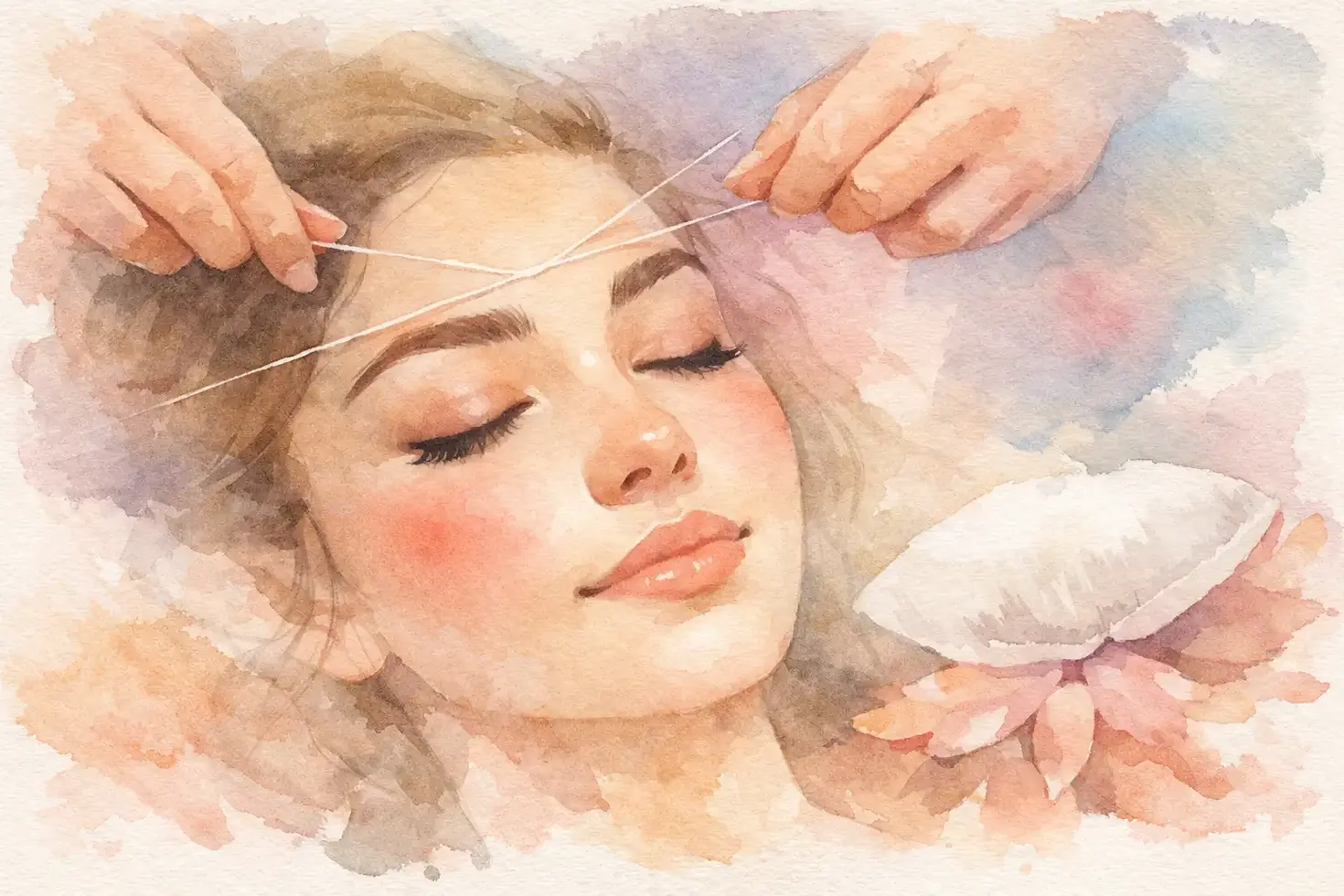
Threading uses a loop of cotton thread to catch and remove individual hairs or small rows of hair at the follicle. Unlike waxing, it does not require heated wax, resin, or adhesive to be applied directly to the face. That makes it a welcome option for many people who prefer a more natural method of eyebrow shaping, upper-lip grooming, or full-face hair removal.
When performed correctly on suitable skin, threading should not strip the skin barrier or cause lasting damage. The thread works on hair, not on the surface layers of skin. A skilled therapist keeps the skin taut and uses controlled movements so hair is removed cleanly rather than repeatedly tugged at.
What can happen is temporary irritation. It is common to see mild redness, small raised bumps around the follicles, or a warm sensation immediately after an appointment. This is usually a short-lived response to hairs being removed from the root, especially if you have sensitive skin or have not threaded recently. For many clients, it settles within a few hours.
The distinction matters. Short-term redness is not the same as skin damage. Persistent burning, swelling, broken skin, scabbing, or a rash that worsens over the next day is not an expected result and deserves attention.
Why Threading Can Sometimes Irritate the Skin
Even a gentle method can feel intense when the skin is already stressed. Threading is most likely to cause discomfort when the face is dry, over-exfoliated, sunburned, inflamed, or actively breaking out. In those moments, the protective barrier is less resilient, and ordinary friction may feel sharper than usual.
Technique matters too. If a therapist moves too quickly, passes over the same area repeatedly, or fails to hold the skin firm, there can be unnecessary pulling. This may leave the area red for longer or create tiny abrasions. Clean thread, clean hands, and a hygienic treatment space are equally essential. Freshly threaded follicles are more exposed, so cleanliness helps reduce the risk of irritation and breakouts.
Your skincare routine may also be part of the picture. Retinoids, prescription acne treatments, strong exfoliating acids, and peeling products can make facial skin more fragile. Threading over skin that has recently been treated with these ingredients may lead to lifting, sensitivity, or marks that take longer to fade.
This does not mean threading is off-limits forever. It simply means timing and honest communication matter. Let your therapist know if you are using active skincare, have a history of post-inflammatory dark marks, or are prone to reactions. A thoughtful treatment can be adjusted, postponed, or focused on a safer area when needed.
Who Should Wait Before Getting Threaded?
A calm complexion usually responds beautifully to threading. But there are times when giving your skin a little space is the most caring choice. Consider postponing facial threading if you have:
Sunburn, windburn, cuts, or peeling skin
An active eczema flare-up, dermatitis, cold sore, or skin infection near the treatment area
Fresh facial bruising, a recent chemical peel, laser treatment, or microneedling session
A strong reaction to a new skincare product or a breakout that is painful and inflamed
If you use prescription retinoids or are receiving dermatological treatment, check with your dermatologist before booking. The same goes for any unexplained rash or changing skin condition. A salon treatment should leave you feeling cared for, never worried about pushing compromised skin too far.
The Difference Between Threading and Waxing for Sensitive Skin
For some sensitive-skin clients, threading feels gentler than facial waxing because there is no wax adhering to the skin. Waxing can remove fine facial hair efficiently, but it also creates surface-level pull when the wax is lifted away. If your skin is delicate, dry, or using retinol, that extra adhesion may be more than your complexion wants.
Threading offers impressive precision around the brows and can target even very fine hairs without applying product across the area. It also gives the therapist more control over the shape, which is why it remains a trusted choice for creating balanced, natural-looking brows.
That said, no method is universally perfect. Some people find threading uncomfortable because each hair is pulled from the root, while others prefer it precisely because it avoids wax. Your ideal option depends on your skin sensitivity, hair texture, daily skincare, and the area being treated. A professional consultation can make the choice feel much simpler.
How to Prepare Your Skin for a Comfortable Appointment
The best threading results begin before you sit in the chair. Arrive with clean skin and avoid heavy makeup around the brows or face when possible. Skip scrubs, exfoliating pads, retinol, and strong acids around the treatment area for a few days beforehand, unless your dermatologist has given you different guidance.
It also helps to avoid scheduling your appointment immediately after sun exposure, a facial peel, or a high-intensity workout. Heat and inflammation can make the skin feel more reactive. If you are especially sensitive around your menstrual cycle, booking at another time of the month may make the experience more comfortable.
Try not to pluck between appointments. Allowing enough regrowth gives the thread something to catch, reducing the need for repeated passes over the skin. For eyebrow shaping, this patience also helps your therapist create a cleaner, more flattering line.
Gentle Aftercare Helps Prevent Bumps and Redness
After threading, the skin is freshly groomed and benefits from a simple, soothing routine. Avoid touching the area with unwashed hands, as this can transfer oil and bacteria into open follicles. For the rest of the day, keep makeup light or skip it if you can, particularly after full-face threading.
A cool compress can ease warmth and redness. Choose a fragrance-free, calming moisturizer or a light aloe-based gel if it suits your skin. Avoid harsh toners, exfoliants, retinoids, and strong vitamin C products for at least 24 to 48 hours. The goal is not to add more activity to the skin, but to support its return to balance.
For the same reason, hold off on steam rooms, saunas, intense exercise, swimming pools, and direct sun exposure until the initial sensitivity has settled. If you are heading outdoors in Singapore's bright weather, use a gentle broad-spectrum sunscreen once the area feels comfortable.
A few tiny bumps may appear after threading, particularly on the upper lip, chin, or jawline. They often resolve on their own when the skin is kept clean and left alone. Do not pick or scrub them. If bumps become painful, spread, ooze, or last longer than a few days, seek advice from a medical professional.
Precision Is Part of Skin Care
Threading is often described as a natural alternative to chemical hair removal, but its true benefit is precision. A careful therapist can remove only what is needed, preserve the fullness of your brows, and work thoughtfully around sensitive areas. That level of control is what turns a traditional technique into a calming modern salon experience.
Your skin should feel smooth, clean, and comfortably refreshed after the brief redness fades. If it does not, speak up before your next appointment. Share what you noticed, the products you are using, and how long the reaction lasted. Good beauty care is personal, and your treatment should respond to your skin rather than ask your skin to simply endure it.
When your complexion is healthy, your therapist is experienced, and your aftercare is gentle, threading can be a beautiful part of a regular self-care ritual. Give your face the same patience you give your brows, and let precision, comfort, and calm guide every appointment.


Comments