
Does Scalp Massage for Hair Growth Really Work?
A few quiet minutes at your scalp can feel like a reset after a long workday. But can scalp massage for hair growth do more than ease tension? For women noticing extra shedding in the shower, a widening part, or hair that feels less full than it once did, the answer is encouraging but nuanced: massage can support a healthier scalp and hair-care routine, yet it is not a standalone cure for every kind of hair loss.
A well-performed scalp massage is a simple ritual with real comfort value. It may help relax the muscles around the scalp, encourage circulation at the skin’s surface, lift away buildup when paired with cleansing, and create a valuable moment of consistency in your self-care routine. The key is to set realistic expectations and treat your scalp with the same gentle attention you give your skin.
What scalp massage can do for hair growth
Hair growth begins beneath the surface, inside each follicle. Genetics, hormones, nutrition, stress, illness, styling habits, and scalp conditions can all influence how long a strand remains in its growth phase. Massage cannot change every one of these factors, but it may create a more supportive environment for the follicles that are already active.
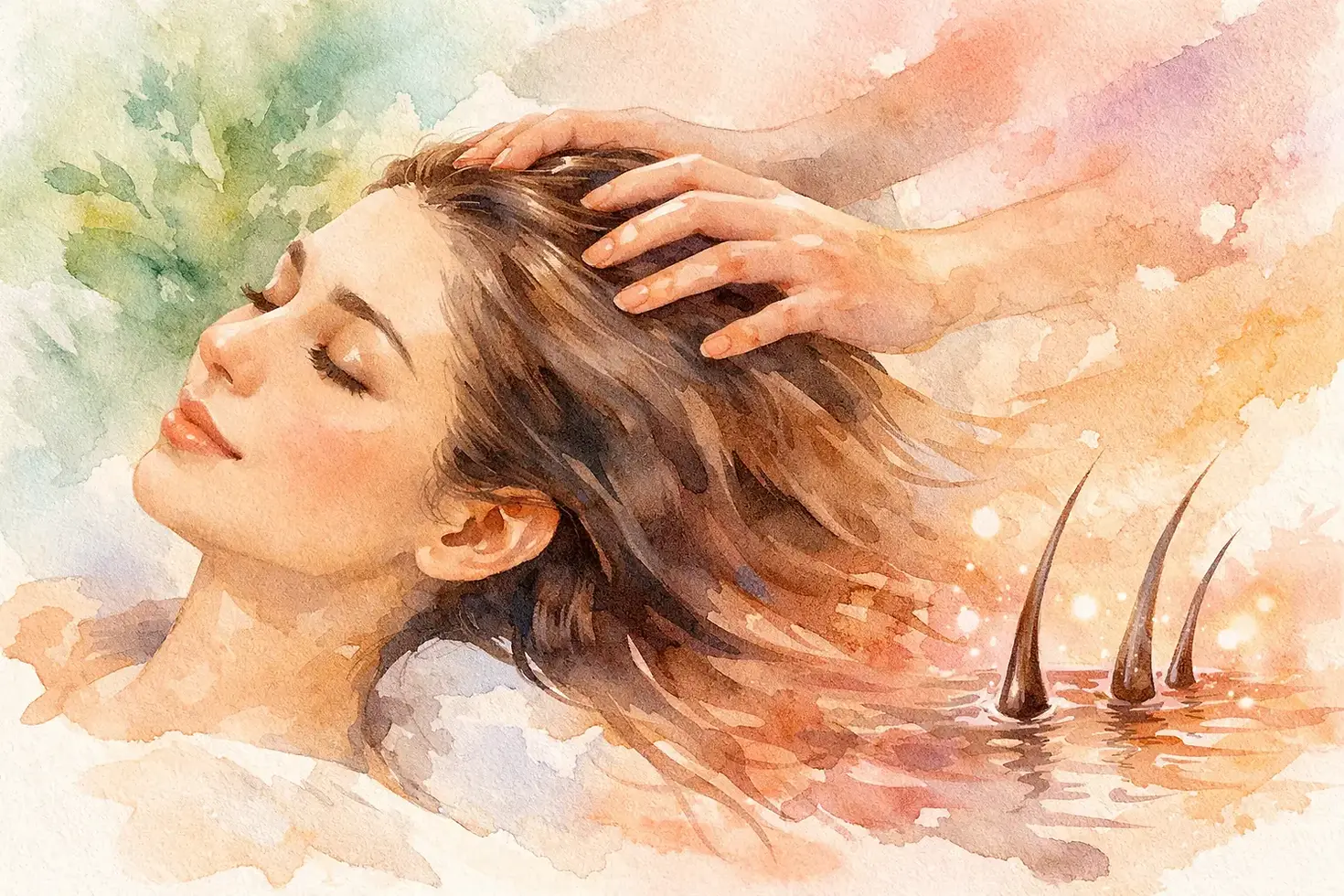
Small studies have suggested that regular scalp massage may improve hair shaft thickness over time. One possible explanation is mechanical stimulation: gentle movement of the scalp skin may influence the cells around the hair follicle. Massage also promotes a sense of relaxation, which matters when stress is contributing to tension, poor sleep, or temporary shedding.
Still, thicker-looking hair and new hair growth are not the same outcome. There is not strong evidence that massage alone will restore hair lost from hereditary thinning, autoimmune conditions, hormonal changes, or scarring disorders. Think of it as a supportive practice, not a promise in a bottle or a quick fix.
Why a healthy scalp matters
A scalp that feels itchy, tight, flaky, oily, or tender needs care before it needs aggressive stimulation. Heavy product residue, inflammation, dandruff, and frequent scratching can make the scalp uncomfortable and may affect how hair looks and feels. A gentle massage can help you become more aware of these changes early.
It also helps distribute your natural scalp oils through the roots. For some people, this makes hair feel softer and more manageable. For others, especially those with very fine hair or an oily scalp, too much oil or pressure can leave roots flat and greasy. Your routine should follow your scalp’s needs, not a one-size-fits-all rule.
If you have a dry scalp, a light pre-wash oil massage can feel deeply nourishing. If you are prone to dandruff or folliculitis, rich oils may not be the best starting point. In that case, a clean scalp and professional guidance are often more helpful than adding more product.
How to do a scalp massage for hair growth at home
The most effective technique is not forceful. Your fingertips should move the skin of the scalp, rather than rubbing hard against the hair strands. Keep your nails out of it. Scratching can cause irritation, breakage, and small areas of damage that make the scalp feel worse.
Try this simple routine three to five times a week. Consistency matters more than a single long session.
1. Start with dry hair or just before shampooing. Place the pads of your fingers at the front hairline and take slow, small circular motions.
2. Work across the crown, temples, sides, and back of the head. Apply comfortable, even pressure, as if gently lifting the scalp away from the skull.
3. Spend extra time where you tend to hold tension, often at the temples and base of the neck. Avoid repeatedly pulling or twisting the hair.
4. Continue for four to 10 minutes, then shampoo as usual if you have used oil. Finish with a few calm breaths rather than rushing immediately to the next task.
A silicone scalp brush can be useful during shampooing, particularly for people with product buildup. However, it should never scrape or tug. If your scalp becomes sore, red, or more flaky after using one, return to your fingertips and reduce the pressure.
Should you use oil?
Oil can make a scalp massage feel more luxurious, reduce friction, and add softness to dry lengths. Traditional Indian head massage rituals often use warm oil as part of a slow, intentional treatment, creating both physical ease and a deeply restorative pause.
Choose the oil based on your hair and scalp rather than assuming natural always means suitable. Lightweight oils may work well for dry hair, while thicker oils can be difficult to wash out and may weigh down fine strands. Patch test any new botanical oil, especially if you have sensitive skin or a history of irritation.
Avoid applying hot oil directly to the scalp. Warm is enough. The oil should feel pleasantly comfortable on your wrist, never hot. If you have active eczema, psoriasis, open skin, severe dandruff, or an inflamed scalp, skip DIY oiling until you have advice from a qualified professional.
The habits that make massage more worthwhile
Scalp massage works best when it belongs to a wider approach to hair care. Gentle detangling, regular washing appropriate for your scalp type, heat protection, and avoiding very tight ponytails or braids can all reduce unnecessary breakage. This matters because breakage can make hair seem as though it is not growing, even when the roots are producing new strands.
Nutrition also deserves attention. Hair is not a priority tissue for the body, so low intake of protein, iron, vitamin D, or other essential nutrients can show up in the hair over time. Do not start high-dose supplements based on hair shedding alone. A clinician can help identify whether a deficiency, thyroid issue, medication, stress event, or hormonal change is involved.
Be patient with timing. Hair grows slowly, and the growth cycle is measured in months rather than days. If massage is going to improve the look or feel of your hair, you are more likely to notice gradual changes in scalp comfort, reduced tension, or stronger-looking lengths before you see dramatic density changes.
When professional scalp care is a better choice
There is a difference between ordinary shedding and a change that deserves assessment. It is wise to speak with a doctor or dermatologist if you have sudden patchy hair loss, scalp pain, bald spots, scaling, burning, or shedding that continues for several months. Early care can be especially meaningful for conditions that respond better when addressed promptly.
For those who simply want a more restorative hair ritual, an expert-led head massage offers benefits that are hard to recreate at home. A trained therapist can use controlled pressure, work through scalp and neck tension, and tailor the experience to your comfort level. At Ohm Secrets in Little India, Singapore, a signature hot oil head massage brings traditional Indian care into a calm salon setting, with attention to both relaxation and the condition of your scalp and hair.
A professional treatment should feel soothing, never painful. Let your therapist know about recent coloring, extensions, sensitivity, migraines, active irritation, or significant shedding so the pressure, oil, and technique can be adjusted thoughtfully.
Give your scalp a gentler kind of consistency
The beauty of scalp massage is not that it promises overnight transformation. It gives you a regular opportunity to slow down, notice what your scalp needs, and care for your hair without harshness. Whether it becomes a five-minute evening ritual or an occasional salon reset, gentle, consistent touch can be a meaningful part of hair care that feels as good as it looks.


Comments